

Cenacolo
A story by Talia Neffson, winner of the Katherine Anne Porter Prize

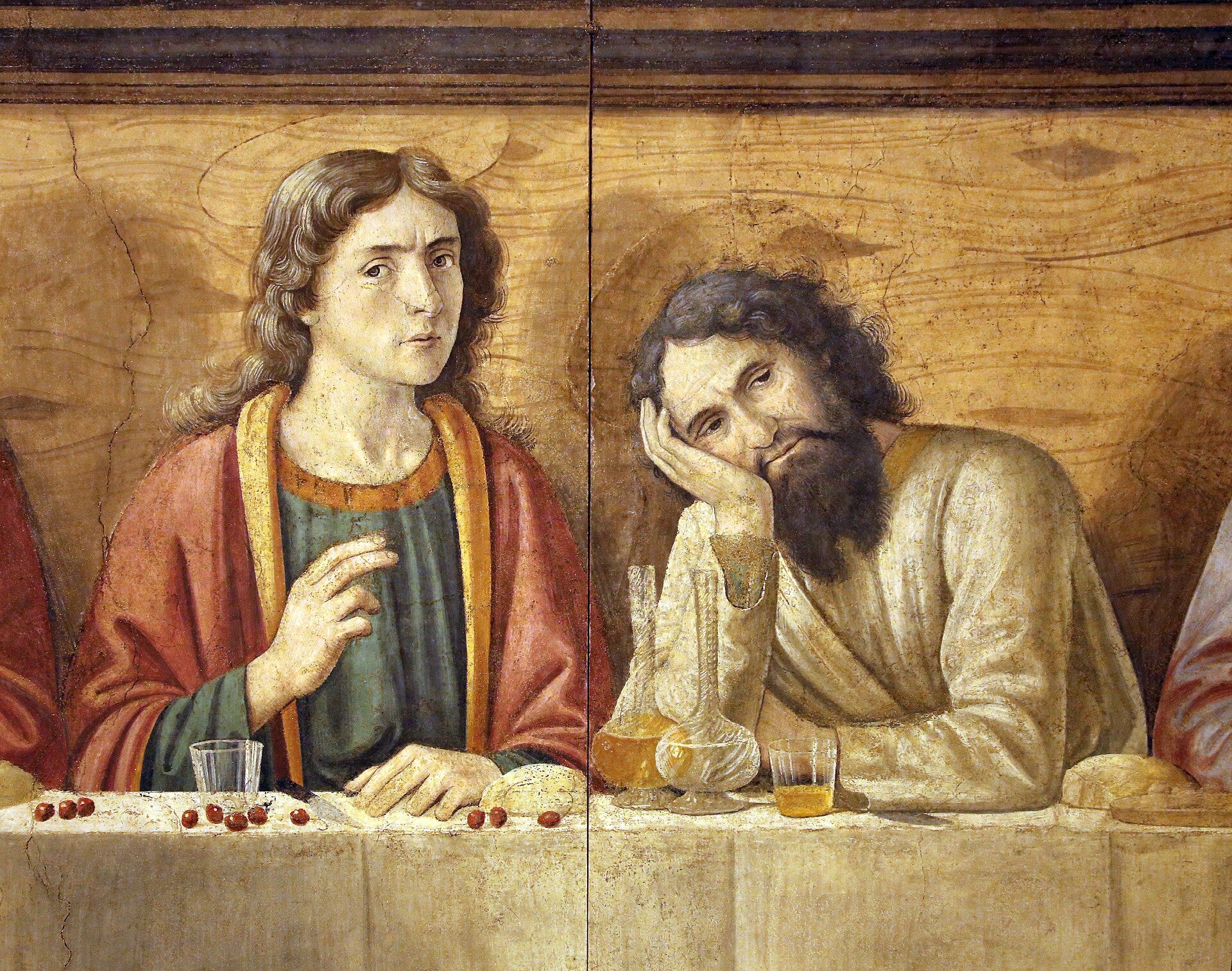

Last week we shared the the 2025 Neruda Prize-winning poems of Michael Lavers, and this week we send you the a story by Talia Neffson, which was awarded first place in the 2025 Katherine Anne Porter Prize competition and appeared, with Lavers’s poems, in our Winter 2026 issue. Judge Nancy Jooyoun Kim had high praise for “Cenacolo,” in which
an art historian and mother constructs an intimate portrait of an intense childhood friendship that couldn’t survive the erasures on which adulthood is often built. This is a story of looking and being looked at as a girl and later a woman, and what it means to understand the self through art made by men—from Andy Warhol to Filippo Lippi—art that is also controlled and monitored, like the title’s Cenacolo at Ognissanti in Florence, open from “Monday and Thursday, nine to noon,” as precisely as women’s bodies and behaviors. In addition to its painterly selection of detail and color, from the grayness of bare feet after city walking in flip flops to the sfumato orange, the scar of a wildfire on a hill, what makes this short story gently astound is its powerful examination of the porousness of memory still wet with the plaster of labor and loss.
Cenacolo
The cherries were loose and lying on a table. There were also peacocks, or at least one peacock. Sondra remembered it clearly—off to one side, with a long, sweeping tail. She couldn’t remember the exact location of the painting. She knew that it was in Florence and that it had the quiet, chalky quality of frescos that they both loved.
Whenever Sondra saw cherries loose on a plate, or in a heap at the supermarket, it reminded her of that painting, a Last Supper. There might have been something historically important about that particular Last Supper. Sondra remembered Mel sitting cross-legged on the ledge of the loggia in Piazza della Signoria, directly under the entrail-trailing Cellini Medusa head, and reading aloud from the grubby Gombrich she insisted on lugging around with them everywhere that summer. Sondra could still picture it clearly: Mel’s glossy head bent over the book; the shadow cutting across Mel’s legs just before the hem of her army-green jean cut-offs; the soles of Mel’s bare feet, gray from walking around the city in flip-flops; and the rest of Mel’s legs, glowing in the bright Italian sun like a young woman’s arms in a Caravaggio, reaching out, bright with bareness, from a black-brown gloom.
They’d had to get let in specially. The church or chapel was only open to the public on particular mornings of the week. Mel had talked about going there all summer, but they’d never quite gotten themselves ready in time to make it. That’s how it always was with Mel: rushing, barely making it before closing time, negotiating with guards for one more minute. At the Last Supper fresco with the cherries and the peacock, which Sondra remembered as being near, but not on, the Arno, on the north side of the river (she had a general impression of rusticated stone and an empty, dusty piazza), Mel most likely did the talking. Eventually the guard said, “Solo dieci minuti,” and led them out of the sun, down a dim length of church hall, into a large, largely empty room.
The fresco took up the whole far wall of the room. Sondra and Mel stood silently, looking. Then they raced around, peering at it from different angles, whispering, “Fuck!” and “Look!” and “Look at the fucking feet!”—as they always did. Sondra didn’t remember who noticed the eggs on the table or the fringe on the tablecloth. But she knew she’d been the one to point out the peacock. Mel had pointed out the cherries.
Sondra didn’t think of the fresco every time she saw or ate cherries, just sometimes. She thought of Mel, and of that summer, at other times too, but not as often as she’d once assumed she would. Sondra never tried to find out more about the fresco, though she knew she could, easily. When it came into her mind she waited, and the thought would pass like a vaguely familiar stranger walking by outside a window.
That summer in Italy was the only time they’d lived together, though for most of middle and high school they’d left school together on Fridays and returned home together to one or the other’s apartment after curfew but before dawn, in mirthful, or dismal, or jittery silence, depending on how the evening had gone. Mel was usually drunk enough for Sondra to stay awake peering down at her friend’s shape on the trundle bed, trying to decide if she was on her back or her side. Mel rarely vomited, but Sondra didn’t yet understand how it all worked—being sick and caring for one another—and she worried.
Once after a long conversation about Mel, Sondra’s husband, Eddie, printed out an article about the ways childhood best friendships often serve as practice runs for adult romantic relationships. He left the article on Sondra’s side of the bed. Sondra read it, then folded it and kept it on her desk for a few weeks, until the boy got hold of it and covered it with blue crayon scrawls. Then she threw it away.
On Saturdays, if Sondra woke first, she lay with the blinds drawn against the afternoon sun, listening to the adults moving around the apartment, and trying to guess what kind of mood Mel might be in. Starting around age fourteen, Mel began Saturdays by climbing wordlessly out onto the fire escape to have a cigarette.
Sondra’s family lived on the sixth floor of a high-rise. Her fire escape looked over a dismal courtyard with moss growing between cracked slabs of concrete. Mel lived with her father and stepmother in a railroad apartment on the third floor of a brownstone. Mel’s mother lived in Mel’s grandparents’ house in San Antonio, because she was trying not to do drugs—except when she was doing drugs, then she lived in different places. Mel had never lived with her mother, at least as long as Sondra had known her. On Mel’s fire escape there was a large, blue glazed flowerpot filled with dirt that Mel stubbed her cigarettes out in before dropping them between the slats to the street. There were no flowers in the pot. Mel was the only one who ever went out on Sondra’s fire escape, except one oppressively hot night when they went out together with a container of watermelon chunks from the deli. They ate the watermelon and spat the seeds down between the slats.
They were huddled in their jackets on Mel’s fire escape under a white late-winter sky, when Mel first pointed with her cigarette at the perpetually-shedding gray, beige, and white bark of a grand old London Plane tree, and said, “Brought to you by … Puvis de Chavannes!” The “Brought to you by” joke became a favorite. On the F train, sitting across from a woman with a long, slender neck and sloping shoulders, Sondra would whisper, “Brought to you by … Ingres!” In the deli, Mel would point at a shelf of soup cans and say, “Brought to you by … Andy Warhol!” Later, Sondra could see this wasn’t especially clever. At the time, she thought it was immensely clever and that they were alone together in appreciating their particular brand of cleverness.
On the side of a hill about three-quarters of a mile south of the Arno, outside the entrance to a ground-floor apartment in what had once been a villa, was a small garden backed by a stone wall. There were no flowers in the garden, only grass and a huge tomato plant bearing cherry tomatoes that appeared in green bunches overnight, turned yellow, then red, then split and festered faster than Mel and Sondra could eat them. In the shade of the tomato plant grew mint, rosemary, and basil plants that always seemed wilted no matter how often Sondra watered them. Dusky-green succulents, with artichoke-like heads, grew in terracotta window boxes along the edge of the balcony of the empty apartment upstairs. Despite not being cared for, they grew wildly, creeping over onto the terracotta tiled roof. But there were no flowers.
Sometimes when Mel climbed out onto the fire escape to smoke on Saturday mornings, Sondra would pretend to be asleep and watch Mel from behind: smooth shoulders rounded into a slouch, arms long and solid, fawn-colored, like a woman in one of those Turkish bath paintings by Ingres, but wearing a wine-red cotton tank top with frayed straps, instead of no top and a silk turban. Without being able to see it from the front, Sondra knew that the wine-red top clung to Mel’s small, pillowy breasts separately, emphasizing the flat space on her chest between them and making them stand out like the almost but not quite anatomically correct tits of a late medieval Sienese Madonna. Picturing this while she looked at Mel huddled over her cigarette always gave Sondra a strange aching, prideful, pitying feeling. Many years later, perched on the closed toilet seat, watching Eddie bathe their boy (age three and docile with exhaustion after recovering from a fever), Sondra experienced a similar feeling. She leaned over to kiss the boy’s head and managed to splash bathwater up the front of her shirt. Eddie laughed, then, seeing her face, wrapped a wet arm around her legs and squeezed.
On a good Saturday morning, Mel might come back through the window and start to sing, in a ludicrously abrasive camp-counselor voice, “Rise, and shine, and give God your glory, glory!” rearranging the lyrics into bawdy jokes about boys and clapping along to herself, offbeat: “Rise, and shine, and give Matt your pussy, pussy!” Pretending to wake up, Sondra would laugh and add a verse like, “Rise, and shine, and run to the toidy, toidy!” They would go back and forth, laughing, until one of them said something like, “Oh, god! I’m going to piss myself!” and scurried off, clutching her crotch.
A good Saturday also might start with Mel climbing back in the window and saying simply, “Let’s get bagels.” They’d crowd around the mirror and Sondra would pull her dark cloud of hair into a messy, high ponytail. Mel would use a purple comb with a third of its teeth missing to straighten her dead-center part and smooth the curtains of limp, bottle-auburn hair that hung on either side of her face and, depending on the brand of dye and how recently she’d rinsed it, sometimes bordered on magenta. Then they’d go to La Bagel Delight, or Harry’s Bagels, and eat sitting on a stoop, squinting into the sun as if they were more hungover than they actually were. Much later, Sondra understood that Mel may have been every bit as hungover as she strove to appear. Those were good Saturday mornings.
Bad Saturday mornings Mel stayed in bed even after Sondra got up and rustled around pointedly. Or after her cigarette Mel might go straight into the bathroom. When she came back, hair sleek and dark from the shower, she’d communicate only in monosyllables. This might go on all afternoon, into the evening, with Mel saying only “Fine” and “Whatever” and Sondra searching her memory for what she had done to precipitate the sudden appearance of the tall, blank wall between them. She rarely found an answer.
Sometime before night, things would get better. Sondra might go into the kitchen to get some juice and, when she came back, Mel would look up from The Village Voice they’d brought home the night before and say, “Guess who’s at the Wetlands tonight?” Or Sondra might put on a tape and begin tidying her room, and, when “I’m Only Sleeping” came on, Mel would quietly sing along. Sondra would join in, and they’d sing together, voices rising to emphasize parts they liked best: “Keeping an eye on the world going by my window…” Then, depending on how much of the day they’d wasted, they might go up to the Met or hang around on the Promenade and draw. They both carried their sketchbooks with them everywhere, a habit they had started together in fourth grade. Before that, Mel had drawn on whatever paper she found at hand, and Sondra hadn’t drawn much at all.
Mel covered the back of her math worksheet with lions. They were drawn in various poses—roaring, lunging, drinking, sleeping. Leaning over so that Mrs. Pinkow didn’t hear, Sondra had whispered, “How did you learn to draw like that?”
“My mom taught me,” said Mel, without looking up. Mel was new that year. “My mom’s an artist,” she said. She was eight. Sondra had just turned nine.
“They’re really good,” whispered Sondra.
“I can teach you,” Mel whispered back, still not looking up, “if you want.
After that they were both artists. Sondra didn’t stop drawing altogether until senior year.
“I’m a consumer, not a maker,” she’d say then, when people looked at Nick’s pictures and asked, “Are you an artist too?”
“She’s too smart for that,” Nick would add, putting his arm around her waist or his hand on her shoulder.
Saturday nights, they’d meet up with people from school on the Promenade or at the pool hall on Houston that let them in without IDs. Mel drank and smoked and sat on someone’s lap.
Sondra nursed a single beer and took note of who Mel disappeared with.
Sundays they’d wake up even later than Saturdays. They’d be apart for a few hours doing schoolwork and sleeping, and Monday mornings at assembly they’d slouch next to one another in the auditorium seats. At lunch they’d go around the block together so Mel could have a cigarette. After school they did homework at Sondra’s apartment, which was closer to school. The second half of the night they usually spent on the phone.
Sondra tried later to remember what they talked about all those hours on the phone but could only recall a few topics: complaints about teachers; praise or disdain for art they’d looked at together; or boys, a conversation sometimes systematized with categorical ratings such as “niceness,” “smartness,” and “hotness.” Sondra didn’t remember ever talking about family, or feelings, or love, or the future. Sometimes one of them would put music on and they’d sing along, puttering around their rooms separately together. But most nights they talked and talked until after midnight. In retrospect, Sondra was mystified that they’d found so much to talk about.
Even their conversations about art she recalled as mostly effusion rather than nuanced discussion.
She couldn’t remember what connection made the place in Florence available for the summer. It might’ve been through Mel’s stepmother’s boss. She did remember Mel joking about “watering the Italian marigolds.”
“How the fuck do you say ‘marigold’ in Italian?” Sondra joked back.
“Mozzarella?” suggested Mel, which made Sondra laugh.
Sondra had heard that in hot weather it’s best to water plants after sundown—something to do with the sun evaporating the water before it soaked into the soil. So that summer, after she and Mel walked back up the hill from town, Sondra stood in the dark, feeling but not seeing the mosquitoes at her shins, and pointed the hose at the plants by the garden wall. Once, after coiling the hose, as she crossed the patch of grass in the dark, Sondra heard a crunch under her sandal, like a thin plastic bottle being crushed. In the morning, she saw that she’d stepped on a snail. Mel never remembered to water anything.
When Mel called to tell her about the place in Florence, Sondra sat as she used to every night: on her bedroom floor, back against the closed door, phone cord stretched under the door. Sondra had been spending all of her free time at Nick’s apartment, on Avenue A. Nick had a tub in his kitchen and a roommate named Vilmos who barely spoke English, left blossoms of cigarette and charcoal butts in mugs, and never showed anyone his drawings. There was a fire escape off Nick’s bedroom window, but it was blocked by a heavy gate that Sondra couldn’t lift by herself.
She first saw Nick standing in front of a large painting at the Bonnard exhibit at MoMA. Mel was in Providence that month at a RISD pre-college program. She’d gotten a scholarship. Nick and Sondra lingered in front of the painting. Other people scrutinized it briefly, and left. Nick looked back and forth between his sketch and the painting and, occasionally, sideways at Sondra. Sondra looked at the painting and, surreptitiously from the corner of her eyes, at Nick. He had a smudge of black charcoal on one cheek. Sondra stared intently at the beautiful, violet-white tree in the painting and wondered if the smudge was a smudge or a Marilyn Monroe–style birthmark. Nick’s thick, untidy hair was dyed Marilyn-Monroe blonde with dark roots. Sondra came to the correct conclusion that the smudge was, in fact, a smudge.
“That fucking cat is really something, isn’t it?” said Nick. Sondra laughed.
Nick didn’t drink or smoke, as a rule. He consumed what seemed to Sondra like tremendous quantities of coffee and drew bad charcoal self-portraits and some interesting still lifes involving bottles of Windex. He’d worked for years as a waiter at a Cuban restaurant in Midtown, but he never asked Sondra to visit him at work. Nick was the first person Sondra slept with, unless you counted the stuff with the tall kid downstairs at the Wetlands. The tall kid at the Wetlands had been wearing wide-leg jeans, frayed at the bottom. He’d complimented Sondra on her Ramones T-shirt.
“My best friend gave it to me,” said Sondra.
“Cool friend,” said the kid. She couldn’t see what color his eyes were, but when he smiled, his teeth were even, clean, and faintly luminescent in the black light.
“Don’t you think it’s a little iffy?” asked Mel, when Sondra first told her about Nick. “I mean, a guy who’s, like, thirty, wanting to hang out with a seventeen-year-old?”
“He’s not thirty,” said Sondra. “He’s not even twenty-seven, yet.” She didn’t mention that she’d been sleeping with Nick for weeks already, while Mel was in Providence, or that she was reasonably sure that she was in love with him.
“I still think it’s weird,” said Mel.
Sondra arranged for the three of them to go to the Met together. Nick went on for too long about the El Grecos. Mel said nothing. They stopped in front of a small Fra Angelico crucifixion that Sondra and Mel had once spent a whole afternoon looking at—marveling at the solidity of the Magdalene’s feet under her dress, trying to decide what the other lady saint had in her basket: Fruit? Eyeballs? Stones? Nick put his face close to it, examining the surface critically. “It’s kind of a mess,” he said. “What a shame.” Then he walked on. The three of them never hung out together again.
Sondra came in to Florence by bus from Volterra on a hot evening in late summer. She went straight up to her hotel room on Via Cavour and, after calling home to let Eddie know she’d arrived, stripped to her underwear, lay down with the fan aimed at her from the foot of the bed, and slept for almost ten hours. This was the end of a three-week trip. It was the longest that she’d been away from Eddie and the boy since the boy was born. She spent the whole first day in the archives at the Museo Archeologico Nazionale. Queasy from reading for hours, and from switching back and forth between reading glasses and distance glasses, she came outside at dusk and found herself dazzled by the vast, gray-blueness of Piazza Annunziata. She thought of something Eddie had once told her, about an indigenous Ecuadorian man who, on emerging from the dense rainforest for the first time and seeing an open plain and horses far away on a hill, said, “Look at the tiny horses!” Sondra sat on the steps of the Ospedale, under the della Robbia relief of the swaddled baby, and waited for her eyes to adjust. Then she walked down Via dei Servi to the market, and back to her hotel, where she ate a stale tramezzino in bed, with the fan on high, and waited for Eddie’s call.
The next day Sondra took her notes to the British Institute Library. It had been recommended by a colleague as a good quiet place to work. A squat lady with cat-eye glasses sat at the front desk, and a man with a neat gray beard sat in an armchair in the main room, reading a newspaper, his back to the tall windows overlooking the Arno. Sondra was the only other patron. She found a small separate room that housed the library’s children’s books. Paper Union Jacks garlanded the walls. A dusty Paddington doll lay on an unmoving rocking chair in one corner. Sondra sat at the wide oak table in the middle of the room for long enough that the lights clicked off. She continued working by the glow of her laptop screen and the little sunlight that came in from the small window overlooking the river. Sondra came back again the next day, and the next. She alternated between absorbing, exhausting work and long stretches of staring into the small window as if it were a painting.
Thinking back on it, she imagined the phone call should’ve been fraught with awkwardness. They’d barely spoken that spring, except at school. When they did hang out—standing on the corner at break while Mel smoked, or walking to and from Sal’s for a slice at lunch—it felt to Sondra like they were being watched or playing a part. She found herself thinking about those people in colonial Williamsburg or Sturbridge Village who wore bonnets and made you churn butter, and who wouldn’t break character, no matter what. When she tried to explain this to Nick, he laughed and said, “I don’t know what the hell you’re talking about with Mel, but I remember those places, with the bonnets!”
But Sondra didn’t remember feeling awkward, or anxious, or even surprised when Mel called to tell her about the place in Florence. She remembered that they’d both acted from the start as if there were no question that they would spend the summer in Florence together. She remembered teasing Mel about sounding like she’d been huffing from a party balloon because she was so excited, and how easily they fell back into the familiar rhythm of hashing out logistics together: Mel proposing impractical agendas; Sondra counter-proposing; Mel calculating the schedule down to the minute (“If we leave the Baptistery at one twenty, walk to the Bargello—is that how you say it? Bar-jello? Bar-yello?—anyway, we’ll need… let’s see … ten, twelve minutes in between, that’ll give us time for coffee and a cigarette, maybe a snack…”), and Sondra knowing all along that they’d never arrive anywhere close to the scheduled time and everything would have to be curtailed accordingly.
Every night while she was away, Eddie video-called with the boy so Sondra could tell him a story before bed. Sometimes the boy requested “the salad-bug story.” This was Sondra’s sanitized version of the time she and Mel found a large, leaf-like bug crawling inside the big bowl of salad they’d proudly prepared for themselves on one of their first nights in Florence. Sondra exaggerated their reactions to a vaudevillian scale, omitting the fact that they’d both been drunk enough to find it wildly funny when Mel knocked the open, not-quite-empty bottle of wine off the table.
It bounced once, resoundingly, on the tiled floor, then, spinning like a spin-the-bottle bottle, flung an elegant, arching spray of burgundy onto the white wall. (Before they left for the summer, Mel somewhat-effectively masked the stain with a white pastel.) Perched on the edge of the bowl, the salad-bug cocked its cherry pit–sized head, inspecting them from one side, like a lizard. Mel fashioned a trap from an empty yogurt container and a Pitti Palace floor plan. The creature hopped from the lip of the bowl to the tabletop, and after two failed attempts and much yelping Mel caught it. They could see the Pitti Palace map lift in the middle from the pressure of the bug trying to escape.
“Poor thing!” said Mel. “It’s freaking out.”
“Quick!” said Sondra, and without stopping to slip their sandals on, they carried it outside and released it into the grass. It was too dark to see it hop, creep, or fly away.
When Sondra told the boy the salad-bug story, she referred to Mel as “my friend Mel.” At the end of the story, the boy always asked, “What happened to Mama’s friend Mel?” Sondra would answer, “She got sick. So she went to live in Colorado, to get better.” Sometimes the boy would leave it at that. Sometimes he would ask, “Where is Colorado?” or “Why?” The night before Sondra left for Italy, he requested the salad-bug story and at the end said, “Can we visit Mama’s friend Mel in Colorado?”
“No, Sweetie,” said Sondra.
“Why not?” asked the boy.
“Because she’s not there anymore.”
The boy asked where she was. Sondra paused and said, “I don’t know.”
“I didn’t technically lie to him,” she’d explained to Eddie, later. “I mean, we don’t really know where she is, right?”
“It’s okay,” Eddie reassured her. “It’s hard to know what to say.”
After the boy was asleep, Eddie would call her back on a regular, non-video call, and they’d talk while Sondra walked laps around the cathedral. One night she huffed her way up the south hill, past tourists taking pictures of the view off Piazzale Michelangelo, to the plaza in front of San Miniato, overlooking the cemetery and the city and, beyond that, the hazy hills. Sondra could see, far in the distance, a long ridge of safety orange–colored flame cutting across a hillside, which she estimated must be near Prato. The smoke from the wildfire gave the air around the hills and above the hills a smudgy quality. She described this to Eddie.
“Sfumato!” said Eddie. “Does it look like a del Sarto?” Sondra laughed.
After hanging up, she stood in front of San Miniato until it was too dark to see anything but the city lights, and the stars, and the slash of wildfire. She knew that these were the same stars, more or less, that Galileo had seen from these hills, though this seemed impossible. She did not follow the road past Miniato to where it intersected the narrower road that, after a little more uphill walking (hugging the stone walls to avoid cars speeding down toward the city) would’ve taken her to a gate opening on the little garden, with the large cherry tomato plants and the patch of grass where they’d released the salad-bug. Sondra stood looking at the stars and the scar of hazy orange on the dark hill for a long time. Then she turned and descended the way she’d come, back into town.
On the phone earlier, Eddie had asked, “Are you thinking about Mel a lot?”
“A little,” Sondra had answered, but she’d felt unsure how accurate that was.
The next day, when she arrived at the library, the squat lady with cat-eye glasses was gone. The front desk was staffed by a pretty, college-age girl. The girl had striking, pale-green eyes and a clean, white blouse. The girl whispered loudly into a phone, in perfect Italian. “Sì, sì, sì… Ciao, ciao, ciao!” said the girl into the phone, then hung up and smiled at Sondra, who was standing shyly in the door.
“Buongiorno, signora,” said the girl brightly, then, in a nimble British accent, “Good morning, Miss. How can I help you?”
Sondra asked the green-eyed girl with the perfect Italian and perfect English about the Last Supper fresco with the cherries and the peacocks. The girl told her without hesitating that she must be thinking of the Ghirlandaio Cenacolo at Ognissanti.
“Of course,” said Sondra. “I remember now.”
“Unless you’re thinking of the Ghirlandaio at San Marco.” The girl blinked her pale green eyes and tilted her head in an attitude of mild forbearance that reminded Sondra of a Lippi Madonna. “There’s a Ghirlandaio Cenacolo at San Marco, too,” the girl explained. “Not as well known, but also very beautiful.”
“Oh, no,” Sondra answered, “not at San Marco.”
She remembered searching cell after cell, increasingly impatient, until she found Mel in the one with the blindfolded Jesus and disembodied hands. Sondra could picture it clearly: the rounded, sun-darkened shoulders, the curtain of glossy hair, and the sliver of Mel’s face—firm, round cheek and pointed chin, one closed eye, and the short, dense, wet eyelashes—distinct against the turquoise background of the fresco, contorted in tears.
Sondra ducked silently out of the room and rushed down the corridor into the cell with the Noli Me Tangere fresco. She’d felt as if she had walked in on someone in the shower. She tried to focus on the trees in the background of the fresco. She sketched the shape of a cypress, then scratched it out and waited for the feeling to subside. Mel came in after a few minutes, dry-eyed. “Ready?” she said, then turned to go without waiting for an answer. Sondra closed her sketchbook and followed.
“Definitely not San Marco,” Sondra told the pretty, green-eyed girl with the perfect Italian and perfect English.
“All right then,” said the girl. “Just thought I’d ask. They are both interesting.”
The girl was slender, with sloping shoulders and high, small breasts that sat far apart under her white blouse. The seam with buttons running along the front of her blouse lay almost flat down the middle of her chest. The girl pulled at the bottom of the blouse as they talked, as if she were nervous about the gap between her buttons. Otherwise her manner was serene and self-assured.
“All right then,” repeated the girl cheerfully. “It sounds like you’re thinking of the Ognissanti Cenacolo. So…” She’d been standing behind the desk. She sat now, and started typing. “I’ll just take a look, then, when it’s open for viewing.”
Sondra stood on the other side of the desk, her back to the main room with the large windows overlooking the river. Behind her, a neat gray-bearded man in one of the armchairs noisily turned the pages of The Times. Sondra was fairly certain it was the same man who’d been reading a paper in that chair the first day she’d come to the library. She looked down at the head bent over the keyboard and noticed that the girl had a straight, pale part, delicate ears too small for her head, and, like Mel, attached earlobes.
Sondra remembered lying with Eddie’s head against her surreally swollen middle and calculating the odds of the baby having attached versus detached earlobes. Eddie couldn’t remember what kind of earlobes his maternal grandfather had had, so they’d calculated the chances if Eddie’s grandfather had had attached earlobes and the chances if he’d had unattached earlobes. Odds were, they’d discovered, the baby would end up with unattached lobes either way—which, it turned out, he did.
“Monday and Thursday, nine to noon,” said the girl with green eyes and delicate attached earlobes. “Oh!” She looked up at Sondra with a new kind of casual openness in her eyes, as if they were friends, as if they shared a joke or an understanding. “That means you could take a look tomorrow,” she said, “if you like.” The gray-bearded man rattled his paper, and the openness in the girl’s eyes closed again. Sondra thanked her and returned to the small room garlanded with paper Union Jacks and stared through the small window overlooking the river and the hot city.
Most nights Sondra prepared a salad and pasta with olive oil and parmesan, basil from the wilting basil plant, and tomatoes from the giant cherry tomato plant. Occasionally, Mel would bring home a bag of long, tapering string beans, or a shapely eggplant, and Sondra would incorporate these into the meal. Mel evaluated food aesthetically, inclining toward whatever would look best in a still life. They always drank wine with dinner. It was so cheap.
As a rule, Sondra didn’t drink much. She didn’t like not being able to clear her head. She didn’t like forgetting to notice where Mel had gone, and who she’d gone off with. But that summer they drank wine together every night, sitting in the kitchen with the window open onto the little garden. The silences between their loud conversations, about what they’d seen and what they wanted to see, and their bouts of manic laughter, were filled by the drone of the cicadas.
Behind the garden wall, a row of stately cypresses creaked just audibly in strong wind.
When Sondra left to meet Mel at the airport, Nick had made a show of kissing her especially tenderly. She remembered him holding her face in his hands and looking her in the eyes. “Have a fucking ball,” he’d said. “And if Mel pulls some kind of ice-queen shit on you, tell her to go fuck her drunk self, okay Kitten?” Sondra had laughed.
They’d almost finished the bottle of wine they’d opened for dinner, when Mel asked Sondra if she was fucking Nick.
“Well …” Sondra laughed one weak puff of a laugh. “We’re not exactly saving ourselves for marriage.”
Mel was sitting on the couch with her legs bent, her bare, grey-soled feet resting on the edge, the almost empty wine bottle clamped between her bare knees. They’d gone to the Bargello that day. Mel had done a good drawing of the Donatello David. Sondra had sketched a della Robbia relief with baby Jesus grasping the thumb of an alarmingly young-looking Mary.
Sondra drew things over that summer as a way of taking notes, to help her remember.
“I figured,” said Mel, not laughing. “I mean, I know you guys have been hanging out for a while now. I just … I guess it’s none of my business.”
“Of course it’s your business,” said Sondra. “Don’t be stupid.” She felt very tired. She folded her arms on the table, pushing aside their dirty dinner plates, and set her head down on her arms. “I just thought… I figured you knew.”
“Are you in love with this guy?” Mel sounded incredulous, as if it had just occurred to her, or as if Sondra might laugh at her for even suggesting it. For a moment, Sondra’s wine-bleary tiredness lifted. She became acutely aware of Mel’s bright, bare legs clamped around the wine bottle, and of the fact that they were alone in this place, across an ocean from everyone else they knew and loved, and that if they wanted to, they could stand up and walk past the tomato plant and patch of grass where they’d freed the salad-bug, down the narrow, twisting road, past the stone walls (and sloping olive groves behind the walls) to the bottom of the hill, past the shuttered jewelry shops and self-serious buskers on Ponte Vecchio, along the dark streets on the other side of the dark slow-flowing river, until they came to a place where the crowding buildings gave way and Giotto’s pale-pink, green, and white marble campanile reached serenely into the big dark sky. Sondra had an impulse to throw a blanket over Mel’s bare legs. But even with the window open it was warm in the room, verging on hot. Sondra felt tired again. She closed her eyes.
“I think I am,” she said. “In love with him, I mean. Weird, right?”
Mel didn’t say anything. Sondra opened her eyes. Mel was looking out the window at the garden wall, or maybe behind that, at the row of cypresses.
“That’s great,” said Mel, turning her blank eyes to Sondra. “I mean, if you’re happy, or whatever. If he’s treating you right. That’s great.”
Mel got up and started doing the dishes. The dishes were supposed to be Mel’s chore. She let them pile up for days but always did them eventually. Sondra lowered her head and closed her eyes again.
Mel let a dish fall into the sink with a clatter and, raising her voice over the running water, said, “Honestly, I still think it’s weird.”
“What?”
“That he’s fucking someone so young. I mean, what is he, like thirty?” “Twenty-seven,” said Sondra.
“Yeah,” said Mel. “Twenty-seven. That’s kind of fucked up. Isn’t it?”
In the morning, instead of walking straight over Trinita bridge toward the library, Sondra turned right a few blocks from the river onto Borgo Ognissanti and soon came to Piazza Ognissanti. The square was empty and hot, as she’d remembered, but the day was overcast, and the façade was Baroque marble, not rusticated stone. The sun, swaddled in dense clouds, pressed down heavily on the city, like a duvet thrown over a recently occupied bed.
Next to the open door, a sign read: Cenacolo di Ognissanti, Aperto al lunedì e giovedì dalle 10 alle 14, Ingresso gratuito. The door led to a cloister with a single, gnarled olive tree in the center. The church, cloister, and olive tree must’ve looked more or less the same when Sondra had been here with Mel, and maybe a hundred years before that, but Sondra couldn’t remember the cloister or the olive tree at all. There was a desk at the far end of the cloister but no guard. She walked alone along a dim hall.
When she first entered, Sondra got the impression that the bright expanse at the other end of the long, empty room was a separate physical space, brightened by the cloud-swathed sun coming over low walls behind the table spread with a white cloth, and that the people seated along the length of the table were real people. But of course they weren’t real.
“Fuck,” said Sondra, under her breath, though no one else was in the room.
Sondra had heard that Mel was back from Colorado. She’d heard that Mel was working at a restaurant on the Upper West Side, as a bar back, and that she’d gained weight. She’d heard this from a classmate she ran into in the elevator at her therapist’s office in midtown. This was after she TAed Eddie’s Before the Rise of the Romans class but before she’d finished her dissertation; after she’d started sleeping with Eddie but before they’d moved from his place in Jackson Heights with a kitchen fire escape to the place in Inwood with a second bedroom, no fire escape, and a “seasonal” river view. When Sondra got upstairs, she told her therapist what the classmate had said. The therapist asked: “So how does it make you feel to hear those things about Mel?”
“I don’t know,” said Sondra. “I guess if she’s heavy it probably means she’s clean, which is good.”
The therapist nodded.
“And if she has a job, that’s good.”
The therapist looked at her patiently, inscrutably.
Sondra hesitated. “I don’t like the idea of her working behind the bar. I mean, if you’re trying to stay sober, doesn’t that seem stupid? A fucking bar? It’s just the kind of thing Mel would do, to prove she could. It seems—it seems really fucking stupid.”
“So,” the therapist asked after another pause, “you don’t trust Mel to take care of herself in a matter like that?”
“No,” said Sondra. “I don’t.”
“Do you think it’s your job to take care of her?”
“Of course not. No. But …”
“But what?”
“She’s—she was my friend.”
“Yes. Do friends always take care of each other?”
“I mean, ideally. Right?”
“Did you take care of Mel?”
“I guess so. I mean, I tried to.”
“Did Mel take care of you?”
Sondra thought for a moment. “She tried.”
That was in late winter. Sondra thought about going to the restaurant on the Upper West Side. She looked at the restaurant’s website, scanning the pictures for Mel in the background of an interior shot, or in a staff party photo. She didn’t find her.
That April, Sondra married Eddie at City Hall, with her parents and Eddie’s brother as witnesses. Afterwards, they all went to Veniero’s for almond cookies and gelato.
That June, Sondra got a voicemail from Mel’s stepmother. In September, Mel’s stepmother called again, inviting her to a service at the stone they were having put up in Cypress Hills. She said she wanted to give Sondra one of Mel’s sketchbooks. But she never did.
The cherries were there, scattered loose around the tabletop. There was one peacock, with a sweeping tail, but it wasn’t on the floor. It was perched in a window painted on the right-hand side. On the left-hand side was the painted window with the small gray bird Mel had noticed. In the foreground, where the peacock on the floor should have been, stood a pair of large gleaming silver jugs. Sondra did not remember these at all. The tablecloth, which Sondra remembered as plain white, had a line of decorative embroidered dragons parading on each end and a delicately drawn fringe. She did remember the fringe.
Behind the table was a low wall. Above the wall, the tops of lemon, orange, and cypress trees raised their dusky-green heads. Behind and above the trees, a faded, gray-blue sky was alive with birds of varying types and sizes, crowded as the air space around Malpensa airport. There were swallows, and what looked like a quail, and even a hawk carrying or swooping down on a duck. Sondra hadn’t remembered the birds at all.
Talia Neffson’s first novel, No Fun, is forthcoming from Milkweed Editions. Her short fiction has appeared in The Hopkins Review. She lives in Brooklyn, New York, where she was born and raised.
Order the Winter 2026 issue of Nimrod International Journal or subscribe today.